

The platform’s registered office
As I mentioned in the previous article, the location of the platform you deliver for matters for VAT. For companies based in the Czech Republic (Wolt, Liftago, Dáme Jídlo), the situation is simple – the only VAT issue to watch is monitoring turnover.
Complications arise with platforms not based in the Czech Republic. Companies such as Uber or Bolt are based in countries such as the Netherlands or Estonia.
The platform is based outside the Czech Republic
In this case, let us return to the diagram from the previous article:
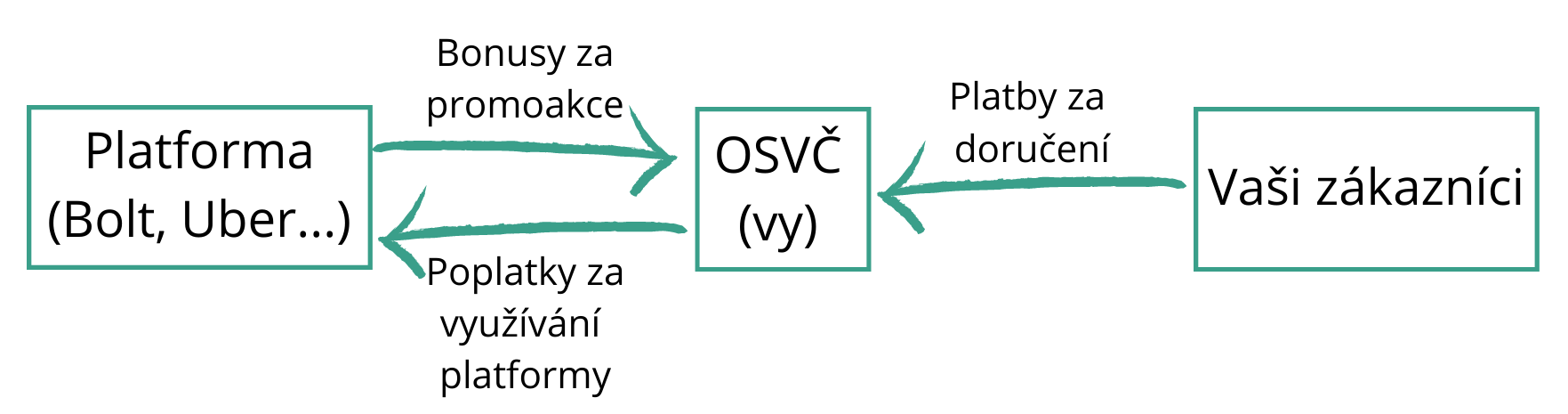
For delivering parcels or lunches, or providing taxi services, customers pay you in cash or through the app. This income counts towards VAT turnover, but otherwise providing this service is treated like any other business in the Czech Republic.
The platform charges you certain fees for using it. In effect, it provides a service – a form of licence to its app, through which you get customers. If you work for a platform based outside the Czech Republic (Uber, Bolt), you must register as an identified person for VAT purposes. Essentially, this means you must report these fees in a VAT return and pay an additional 21% VAT on them to the tax office.
As part of various promotions, the platform offers you different bonuses. The platform automatically issues a self-billing invoice for these bonuses. You appear on this invoice as the supplier, because you provided a service to Uber or Bolt itself (you met a condition for earning a bonus, such as completing a certain number of trips). You must report this invoice in an EC Sales List, notifying the tax office that VAT on it should be accounted for in the country where Uber or Bolt is based. You pay no VAT on this amount. These bonuses do not count towards your VAT turnover because they are a service supplied to another EU country.
The platform is based in the Czech Republic
For VAT purposes, the only issue is VAT turnover. You must become a VAT payer if your income over 12 consecutive months exceeds CZK 2,000,000 :-).
You are a VAT payer
If you are already a VAT payer, the obligations above apply according to which platform you work for, or rather where that platform is based. In addition, you must pay 21% VAT on fares or delivery payments received, just as on other invoices you issue.
I hope this mini-series has explained everything essential and that delivering parcels, lunches or customers will now be a breeze :-). If you are unsure, do not hesitate to get in touch and we can look at it together.