
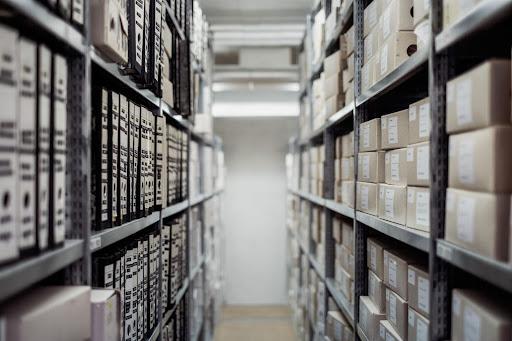
How should you archive?
This naturally depends on the format in which accounting and tax documents were kept. Some accountants already keep their clients' “folders” entirely virtually, for example on Google Drive or other cloud storage. If everything is virtual, keep the files in secure storage; for example, download the entire year's records as a ZIP file and put it in backup storage.
If you have a traditional folder of printed documents, take care with storage conditions. Ideally, keep it somewhere dry with normal humidity — simply somewhere the documents will not be damaged, whether by environmental conditions or physical damage.
If your documents were stored somewhere that burned down, or were otherwise destroyed, you must report this to the tax office.
How long must you archive?
Mandatory retention periods differ between companies and self-employed people. Generally, archiving is easier for the self-employed. But VAT registration and whether you have employees also matter.
It is also important to note that retention runs from the end of the accounting or tax period. For example, tax documents from 2021 can be removed from the archive no earlier than 1.1.2032.
| Self-employed person | Limited liability company | |
| non-VAT payer — documents | 3 years * | 5 years |
| VAT payer — tax documents (i.e. those included in the VAT return) | 10 years | 10 years |
employer
|
3 years
45 years** 5 years |
3 years
45 years** 5 years |
* This period is extended by another 5 years if you claim a tax loss in the relevant year. It is also extended if you claim financial leasing as a tax-deductible expense.
** If an employee receives an old-age pension while employed, mandatory retention is shortened to 10 years.
Companies also have certain documents they must retain permanently. These include agreements concerning the company itself, such as incorporation agreements, agreements on transformations of the legal entity or its dissolution. This category also includes audit reports, annual reports and property ownership-transfer agreements.
You must also remember to retain all relevant documents for the accounting period concerned. So if I claim depreciation in 2024 on a building bought 20 years ago, I must still have all the documents for that building. Even after 20 years, you must be able to demonstrate its acquisition cost and any capital improvements during an inspection. In addition, these documents must be retained for further years, just like all other accounting documents from that year.
For example, a company bought an office building in 2004 (depreciation group 6, with a 50-year depreciation period). You take the final depreciation charge in 2054, and for another 5 years you must still be able to locate the documents used to establish the acquisition cost.
What about documents I no longer need to retain?
Ideally, hand these documents to a specialist company providing official document destruction. It will give you a handover record confirming receipt. Such a company will thoroughly destroy your documents, making them disappear from the face of the earth :-). If you are in Brno, SAKO also offers incineration of confidential documents, even generating electricity and heat for the city from them :-).
But I realise destruction services cost money and are not ideal for everyone. You can also destroy documents yourself. However, do so in a way that prevents subsequent misuse. Some personal information about employees, for example, may be sensitive.
Is it too much to handle?
Do the archiving rules seem overwhelming, or do you have nowhere to store documents safely? Companies specialising in document archiving are available to help. They store your labelled documents in a dedicated records facility with controlled temperature, humidity and all other conditions.
Generally, there is no need to fear archiving. Observe the retention period, store documents safely and remember where you put them :-D.